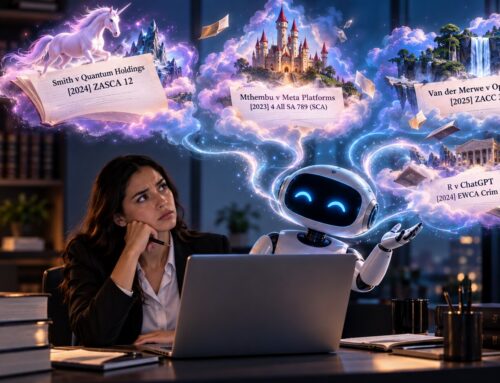
What should the regulatory approach for AI in South Africa be? Artificial Intelligence (AI) has exploded globally – just look at ChatGPT. While AI offers enormous potential to drive innovation and inclusive growth, it also raises serious concerns, from AI-generated works to deepfakes. These challenges demand a careful and balanced regulatory approach. These are my insights on how we could approach it.
South Africa’s AI policy must address the enduring impacts of apartheid, ensuring that new technologies do not reinforce historical inequalities but create fairer opportunities for all.
In this global trend, countries worldwide are racing to enact laws and policies to balance the opportunities and risks of AI. In South Africa, where technological progress intersects with persistent socio-economic inequalities, regulation must both enable innovation and safeguard constitutional rights. Currently, there is no legislation specifically dedicated to AI. Existing laws, like the Protection of Personal Information Act (POPIA), the Consumer Protection Act (CPA), the Copyright Act, and the Electronic Communications and Transactions Act (ECTA), cover aspects such as data protection, privacy, AI-generated works, and consumer rights. Yet, many critical AI-related challenges remain unaddressed, highlighting the need for a comprehensive statutory framework specific to it.
Response to these gaps?
In April 2024, the Department of Communications and Digital Technologies (DCDT) published the South African National AI Policy Framework. This marks a crucial step towards a coherent national AI strategy. Moreover, this framework outlines 12 pillars, including developing ethical guidelines and integrating AI into the public sector. Its goal is to circumvent certain ethical and related problems surrounding AI while at the same time ensuring it does not hinder innovation and technological progress. While it is not yet legislation itself, the framework serves as a guide for future laws, regulations, and practical AI initiatives.
Since AI regulation is still novel, it’s also helpful to look at how other countries are approaching it. The Organisation for Economic Co-operation and Development (OECD) maintains a live database of over 1,000 AI policies from all around the world. According to that database, the U.S. leads in the sheer amount of policies, laws and regulations implemented specifically regarding AI. For example, the U.S. has developed policies within the patenting law realm that allow AI-generated inventions only if a human inventor is named. South Africa’s Patents Act, by contrast, offers no clear guidance, creating uncertainty around ownership and inventorship.
Another notable example is the EU AI Act, which is the world’s first major AI law. This legislation uses a risk-based approach to make AI safe and trustworthy by setting stricter rules for protecting privacy and fundamental rights. This Act creates governance bodies to oversee AI across industries.
South Africa could follow a similar approach, while obviously balancing our historical context.
What regulatory approach should South Africa take then?
South Africa can learn from these international examples. However, foreign models cannot be adopted in their entirety. South Africa’s AI policy must address the enduring impacts of apartheid, ensuring that new technologies do not reinforce historical inequalities but create fairer opportunities for all. Following the U.S. example, a human-centric AI approach would prioritise human oversight, enhance human potential rather than replace it, and be particularly crucial in a country where jobs are scarce and socio-economic inequality remains high.
Actions you can take
- Learn more about AI Governance by joining our upcoming webinar on AI Governance training.
- Keep up with us by registering for our newsletter and reading our insights for further developments.